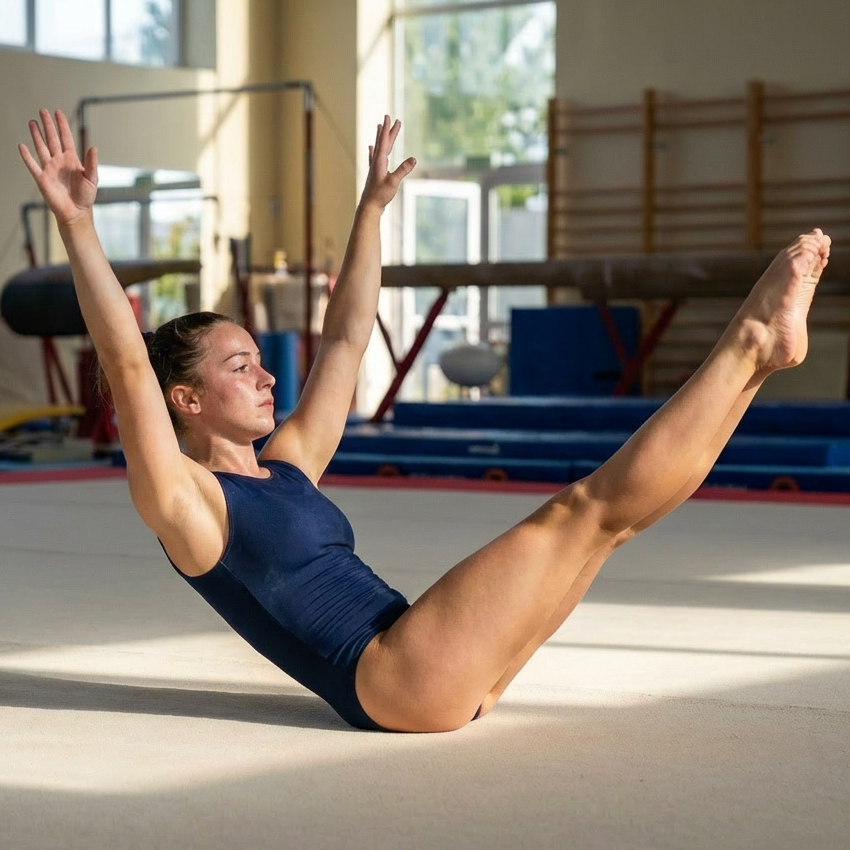
Gymnastics stands out as a unique blend of artistry, explosive power, dynamics, and flexibility. While the spotlight often shines on the grace of a balance beam routine or the height of a vault - These achievements come from following a structured, science-based training plan that is tailored to suit different ages and abilities.
Conditioning is not just an extra part of gymnastics training. It is the essential framework that ensures safety, longevity, and technical mastery.
1. Injury Prevention and Joint Stability
The primary objective of any conditioning program is to bulletproof the athlete's body. Gymnasts use their joints—particularly wrists, shoulders, knees, and ankles—to forces several times their body weight.
Stronger Joints: Training that includes holding still and slow, controlled movements strengthens ligaments and tendons, helping protect the body during high-impact landings.
• Preventing Overuse Injuries: Conditioning keeps muscles balanced so the body isn’t overworked in one area, reducing the chance of injuries.
2. The Power-to-Weight Ratio
Gymnastics is a sport of relative strength. A gymnast must be able to control their own body weight with absolute precision. Conditioning focuses on developing lean muscle mass and explosive power without unnecessary bulk.
• Quick Muscle Activation: Plyometric and sprint drills train the fast, powerful muscles that not only create the power and height for skills like tumbling and vaulting but for key leaps and jumps that are used on floor and the balance beam.
• Core Strength: A gymnast's power is generated from the core and transferred to the limbs. Without a rock-solid midsection, energy is lost, and skills become inefficient.
3. Technical Precision and Skill Acquisition
There is a direct correlation between a gymnast’s physical readiness and their ability to learn new skills. When an athlete is physically strong, they can maintain the key “dish" or "arch" positions required for advanced maneuvers.
• Consistency: Fatigue is the enemy of technique. Conditioning builds the endurance necessary to perform the last skill of a routine with the same precision as the first.
• Air Awareness: Improved strength allows for better body control while in the air, leading to safer and better executions.
4. Psychological Resilience
Conditioning is as much a mental discipline as a physical one. The grind of strength circuits builds a "grit" that carries over into competition. Knowing that they have the physical capacity to handle a routine gives gymnasts the confidence to perform under pressure.
[Visual Suggestion: An image of a gymnast performing a " dish, arch, body" hold or a "plank" on the floor, emphasizing the straight line and muscle engagement from head to toe.]
Conclusion
For any gymnast, conditioning is a key factor to help with the success, progression, longevity of their own pathway. By prioritizing strength, flexibility, and endurance, athletes